It's the cartoon, dummy!

/images/_87dc1615-deb4-407d-94fd-0b39099be36b.jpeg

I’ve been pulling my hair out trying to decide how to organize the data for this series. It all started as flashcards in the Anki system. Every day I would create a few new cards and study some of the older ones. It was great, because I could keep track of a cartoon image, a caption, and both the English and Norwegian headwords all in one place. But now I’m seeing some issues.

◇◆◇◆◇◆◇◆◇◆◇◆◇◆◇◆◇◆◇

The word for dinner roll in norsk is bolle, which is also the word for a large bowl. So is this flashcard about bowls or buns? It doesn’t really matter, because both senses are used in both the image and the caption, but what about the English version? There’s no humorous confusion in English. The pun only works in norsk. So do I now create a different card for the Unforgettable English Nouns version of the book? That’s going to create so much duplication!

Ok, Jeff, breathe into this bag and calm down. You’re overthinking it. These are no longer flashcards organized by keywords — they’re cartoons. And the organizing principle of a cartoon is the image. If you just flip your framework on its head, you’ll see that every image needs a set of L1 and L2 keywords and a caption, for each target language. Easy peasy. There’s no reason why the subject and joke featured in Norwegian have to be the same as the subject and caption used in French. And if there is a cartoon that for some reason only works in one language, just don’t assign values for any other language. Voila!

You know what? That works! Now all I need to do is explore whether there’s a better tool to organize all this on my phone. Anki can still probably handle it, but I want to see if there’s anything more data oriented.


Read More


/images/floodboard-logo.png

FloodBoard - Learn to See the Game-Board Like a Computer

I like puzzle games, and one that I’ve always played in a rather mindless way, just to kill time, is the one called Flood It. Or Color Flood. But whatever you call it, it’s the one with a grid of random-colored squares where you start in one corner and keep flood-filling from there in different colors until you’ve flooded the entire board. The fewer moves you make, the higher your score.

But the more I’ve played it, the more curious I’ve become. What is the optimal strategy? Should you always flood as many squares as possible, or is it sometimes better to choose a smaller move to set up a bigger play? And if so, when?

Well, I don’t like just wondering about these things - I want to know. So I wrote a version of the game to help me find out. I call it FloodBoard.

/images/_5843cecd-183d-43d4-8a51-39ef38f29277.jpeg

Cartoons as Database

A while ago, I mentioned that, to manage production of multiple language versions of Unforgettable, I needed a more robust system for organizing the cartoons. They’re currently just in an Anki deck, which I still use for studying, so I was hoping to have it all by finding a robust database that would run on my phone, and that I could still use as my daily study tool.

Well, I never found that magical solution, and with the project preparing to kick into a higher gear now, I need to buckle down and find a way to manage the data and editorial workflows. So I’ve dropped the “phone-based” and “study tool” requirements, and suddenly the decision has become much easier.

/images/_f604f7b8-ed8c-42b5-abac-2cab2ccaaa91.jpeg

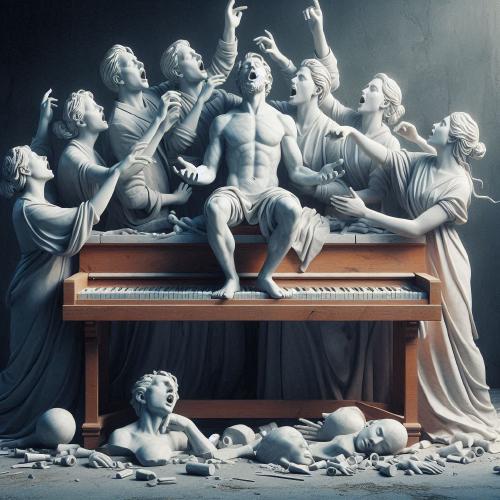
Random Body Parts Singing Together At Last

FrankenTongues began with some very specific features in mind - features that I couldn’t find in other tools - and it’s taken a while to get here, but today was the day I finally got to play with two of the biggest.