/images/floodboard-logo.png

FloodBoard - Learn to See the Game-Board Like a Computer

I like puzzle games, and one that I’ve always played in a rather mindless way, just to kill time, is the one called Flood It. Or Color Flood. But whatever you call it, it’s the one with a grid of random-colored squares where you start in one corner and keep flood-filling from there in different colors until you’ve flooded the entire board. The fewer moves you make, the higher your score.

But the more I’ve played it, the more curious I’ve become. What is the optimal strategy? Should you always flood as many squares as possible, or is it sometimes better to choose a smaller move to set up a bigger play? And if so, when?

Well, I don’t like just wondering about these things - I want to know. So I wrote a version of the game to help me find out. I call it FloodBoard.
/images/_e1d6c52d-fb38-4336-90ef-7d96d374acfa.jpeg

The Very Slow Game Jam

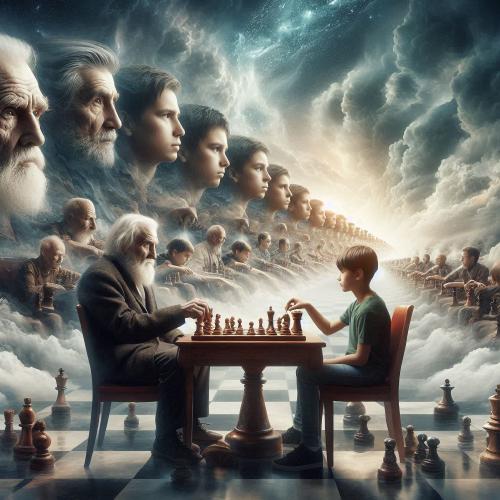
When I was a teenager, my dad and I would play slow chess. His job involved regularly rotating shift work, which meant that we often went weeks at a time where our days didn’t really overlap. So, to stay connected, we kept a chess board in the kitchen. Every day, Dad would make a move on the board while eating after he got home, and I would make mine after school. It was a fun way to stay connected when our lives were otherwise out of sync.

We didn’t know it at the time, but we were also inventing what would become an important ritual between us.

/images/_9afc0d5d-b13e-4705-a82b-2ec58ea09b29.jpeg

WordFreäk

In order to split the cartoons into beginner and intermediate volumes, I need a way to classify the relative difficulty of the keywords. How am I going to solve that?