One of my favorite movies to discuss is Fight Club. Love it or hate it, if you’ve ever seen it, you probably have a theory about what it’s trying to say. And my favorite way to discover someone’s take is to ask them to explain a single line of dialogue. No matter what you think the movie is all about, your stance is almost always revealed by how you explain that one line.
But of all the explanations I’ve ever heard, I’ve never had anybody echo my own take. Which surprises me, because it’s the only one I can think of that explains all the facts.
Before we get into it though, I should warn you that there be spoilers ahead. Big ones. If you’ve already seen the movie and been down into that grubby basement, then come on in. But if you aren’t a member yet, then you can just piss off.
We don’t talk about Fight Club.
◇◆◇◆◇◆◇◆◇◆◇◆◇◆◇◆◇◆◇
Are you still here? Sorry, friend. It’s not gonna happen. You’re too young. Now take your shit and get off my porch or I’m gonna have to call the police.
Okay. Are the newbs gone? Then let’s get into it.
The line I’m talking about comes at what I feel is the very climax of the film. In a way, the line itself is the climax.
“My eyes are wide open.”
Why does Ikea Boy say that to Tyler, just before he pulls the trigger?
Yes, his name is Ikea Boy. I know the club-o-sphere has taken to calling him The Narrator, but that’s an out-of-world cop-out. And don’t get me started on the names we know for a fact are not correct: Cornelius, Rupert, Travis, and Jack. For the entire film he’s had no name precisely because he didn’t have an identity - he was just a nameless cog in the machine. Then, in the finale, when his identity finally does emerge, he’s christened at the moment of birth by his midwife, Tyler Durden.
Sure, Tyler meant it as an insult, but that doesn’t matter. It’s the only honest in-world name the film gives him. Case closed.
Warning: If you disagree, you’ll have to fight me.
So what does Ikea Boy’s climactic line mean? Why does he say it?
If you scan the internet, you’ll find a dozen different explanations but no consensus. It’s like the film world keeps trying on hats in the hope of finding one that will tie the whole ensemble together. But the reason there are so many to choose from is because each hat fails to explain a specific, glaringly important fact. Ergo none of them really satisfies, so everyone wanders off in search of another hat to try on.
Before we get to my interpretation, let’s take a look at those other hats.
The Psychological-Awakening Fedora
This is the classic explanation. Under its neatly creased brim, Ikea Boy’s final line peaks out, looking like the moment of conscious awakening: he sees the truth at last. Self-delusion becomes self-recognition. It’s tidy, introspective, and it feels like the sort of hat lots of movies like to wear.
The only problem is that there’s a giant hole in the hat that doesn’t get explained.
The Anti-Ideology Wide-Brim
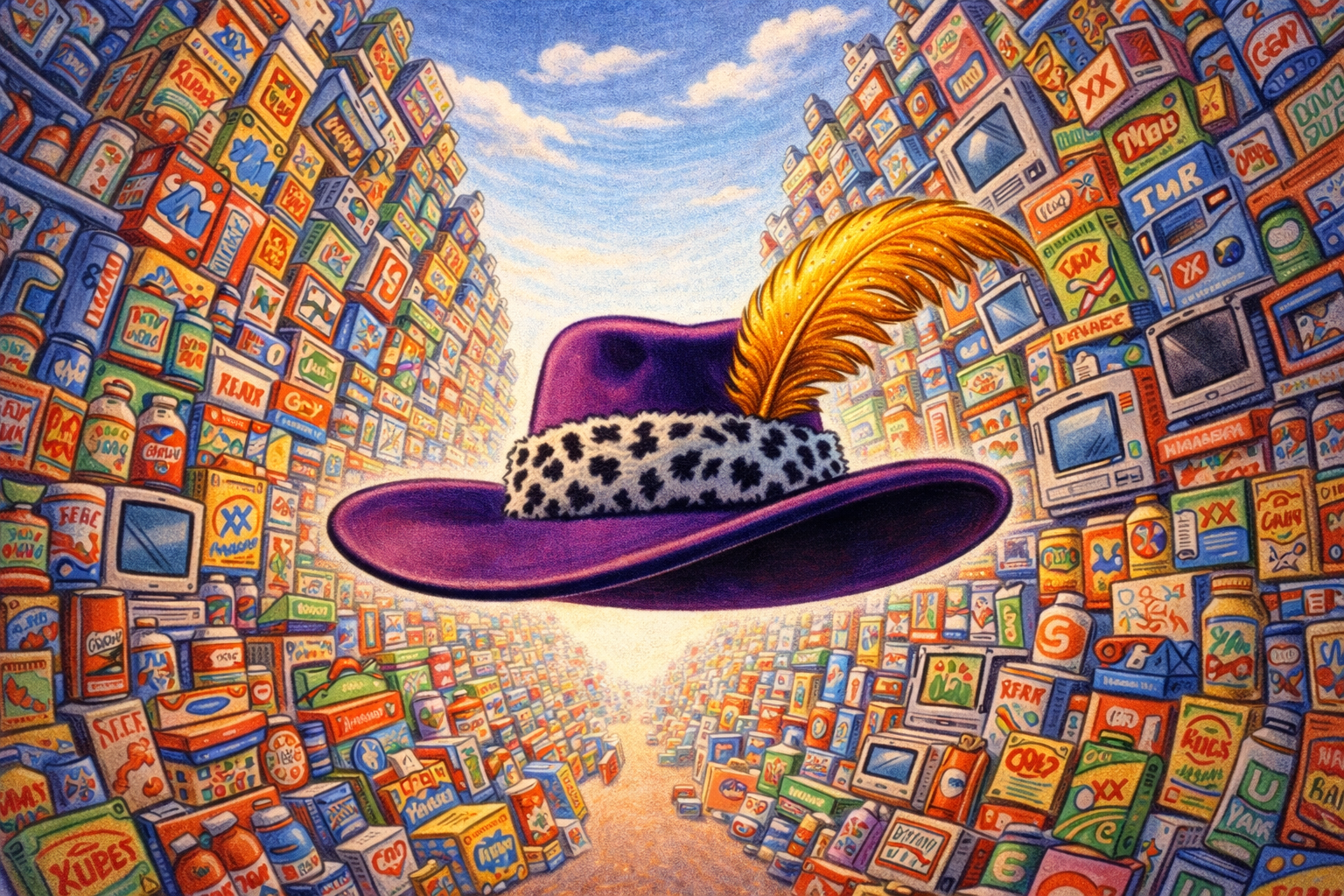
Popular among theorists who enjoy a stronger statement. This version still has Ikea Boy awakening in that moment, but not to consciousness or selfhood. Instead, this hat posits that he’s awakening to the hollowness of Tyler’s philosophy. This hat simultaneously rejects both consumerism and also the rejection of consumerism. Total nihilism that feels very wide - just not very deep.
But again, as cryptically satisfying as it feels, this one too has a big hole in the back that is left unexplained.
The Self-Agency Trilby
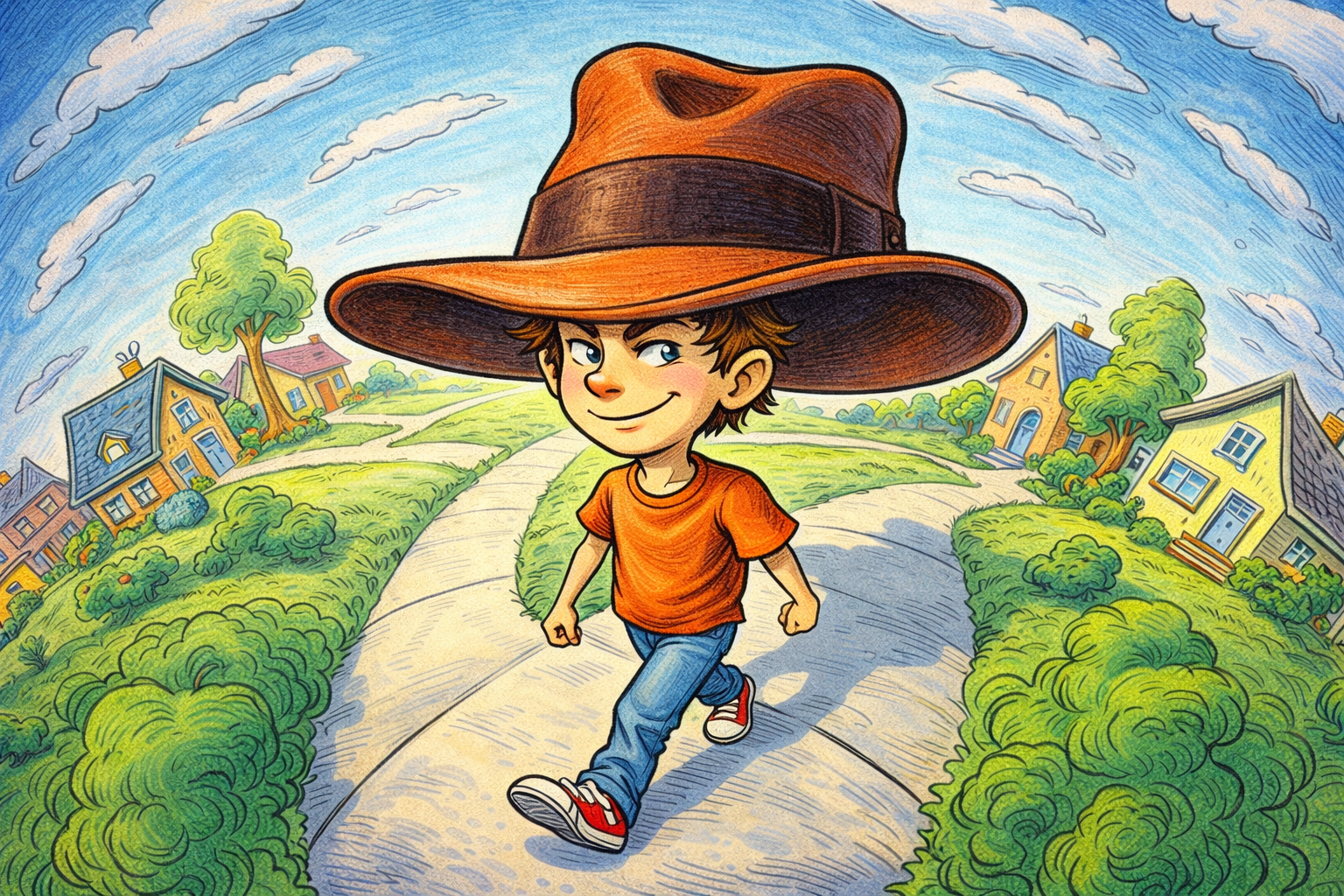
A little sharper, a little more self-assured. This hat inteeprets that crucial line of dialogue as a simple reclamation of control—Ikea Boy liberating himself from the tyrant in his head, like a boy moving out of his overbearing parents’ home and becoming a man of his own in the world. This is a hat with a jaunty tilt, perfect for those who enjoy stories about finding one’s autonomy.
But our independent young man can’t see the giant hole in this one either.
The Meta-Cinematic Mirrored Bowler
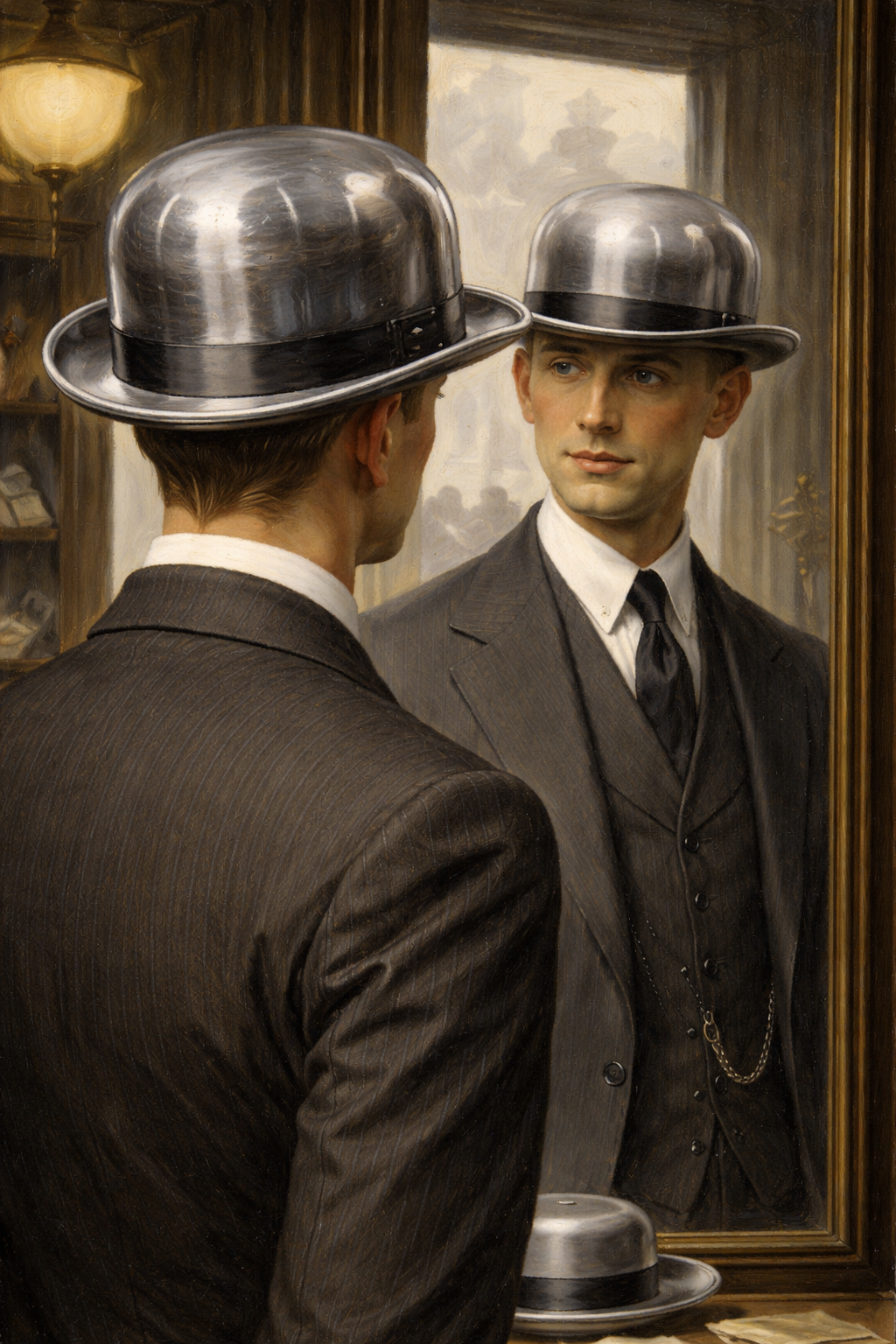
Smooth, symmetrical, and polished to a mirror finish. In this reading, “My eyes are wide open” isn’t about the characters at all. He’s talking about you. It’s a hat that shows you the image of you watching yourself in the mirror, and then of you watching yourself watching, and then of you watching that watching watcher. It’s metaphorical revelations all the way down.
The bowler theory suggests: “You’ve been manipulated by this story, and now you’re starting to see the strings. And as you zoom out, you’ll continue to see more. There are always hidden layers waiting to be revealed.”
But just like the other hats, the bowler has a hole too. In the back, where you can’t see its reflection.
The Mythic Rebirth Laurel
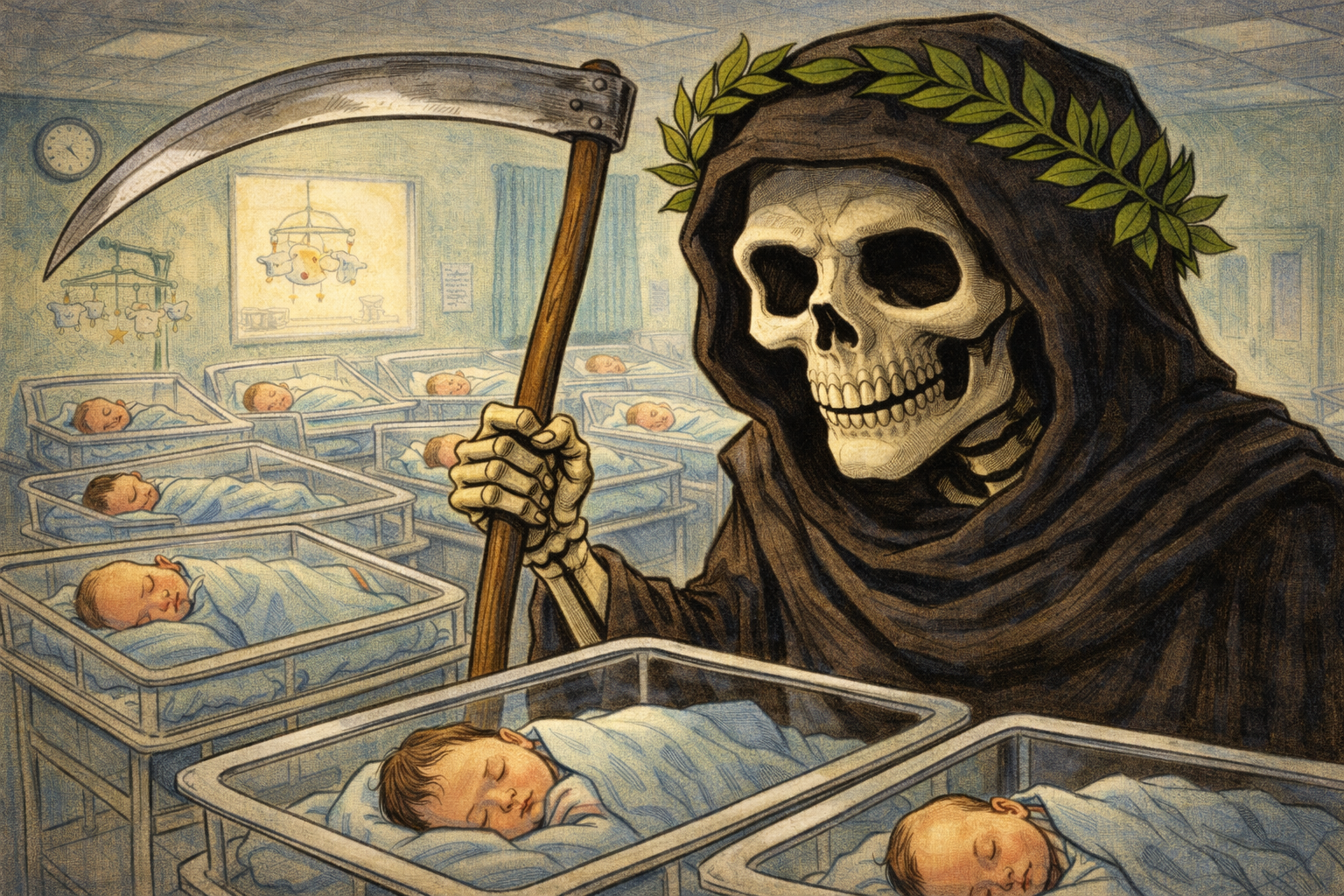
Technically not a hat, but this is my metaphor so I make the rules. Viewed through this hoop of olive leaves, Ikea Boy’s declaration is thought to signal death and rebirth—an ancient ritual circle woven into another modern film. It frames the crucial moment as the shedding of one identity and the donning of another. A timeless cycle rolling ever forward - this time with a giant hole in the middle.
The Lover’s Beret

Soft and fuzzy and ever so chic. Romantic wearers of this chapeau view the line as the moment when Ikea Boy opens his eyes and truly sees Marla for who she is, no longer filtered through Tyler’s disinformation campaign. A soft, whistful cap for a soft, whistful realization about connection and vulnerability.
Pay no attention to the giant hole in it.
The Hole is a Hole
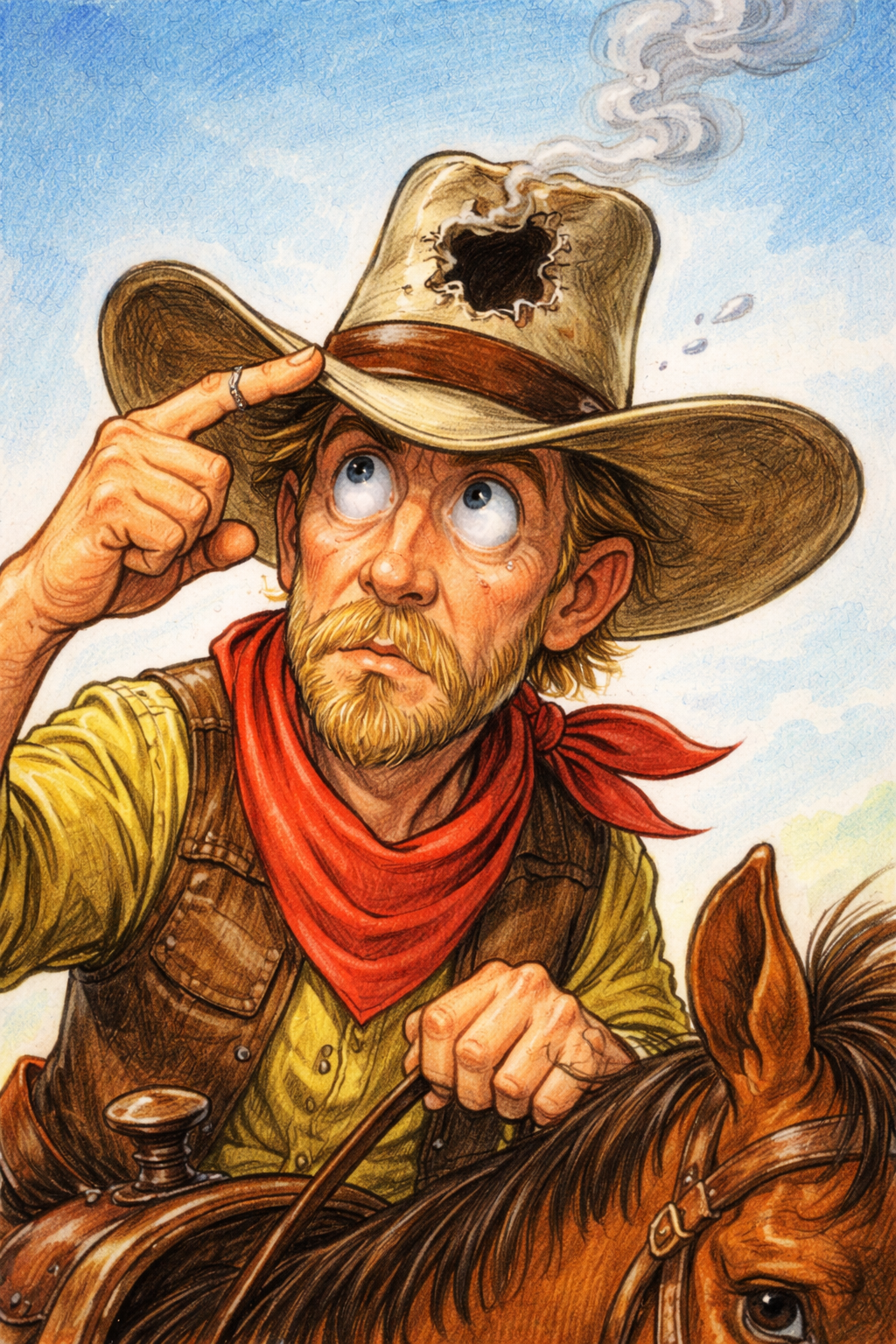
Each of these hats is worn by its various champions with confidence, completing what feels like a satisfying interpretive outfit. And yet, every one of them has that same giant conceptual hole—the one thing none of them manage to explain.
What thing?
The freaking actual gaping hole in the back of Tyler’s head.
For all their rhetorical confidence and theoretical polish, every single one of these interpretations glides right past a glaring story detail that screams for explanation: For the first time in the entire film, Ikea Boy and Tyler have not shared the same physical consequences of their actions.
This isn’t some minor “stylistic flourish” to be waved away. It feels crucial. Intentional. Important enough that Fincher spent piles of money on special effects just to show us that hole. So why?
Which brings me to my explanation. It isn’t ornate. It’s not steeped in cognitive psychology or abstract critical theory. It just takes the story on its own terms and uses its internal logic to explain what we’re seeing.
There Is No Hat
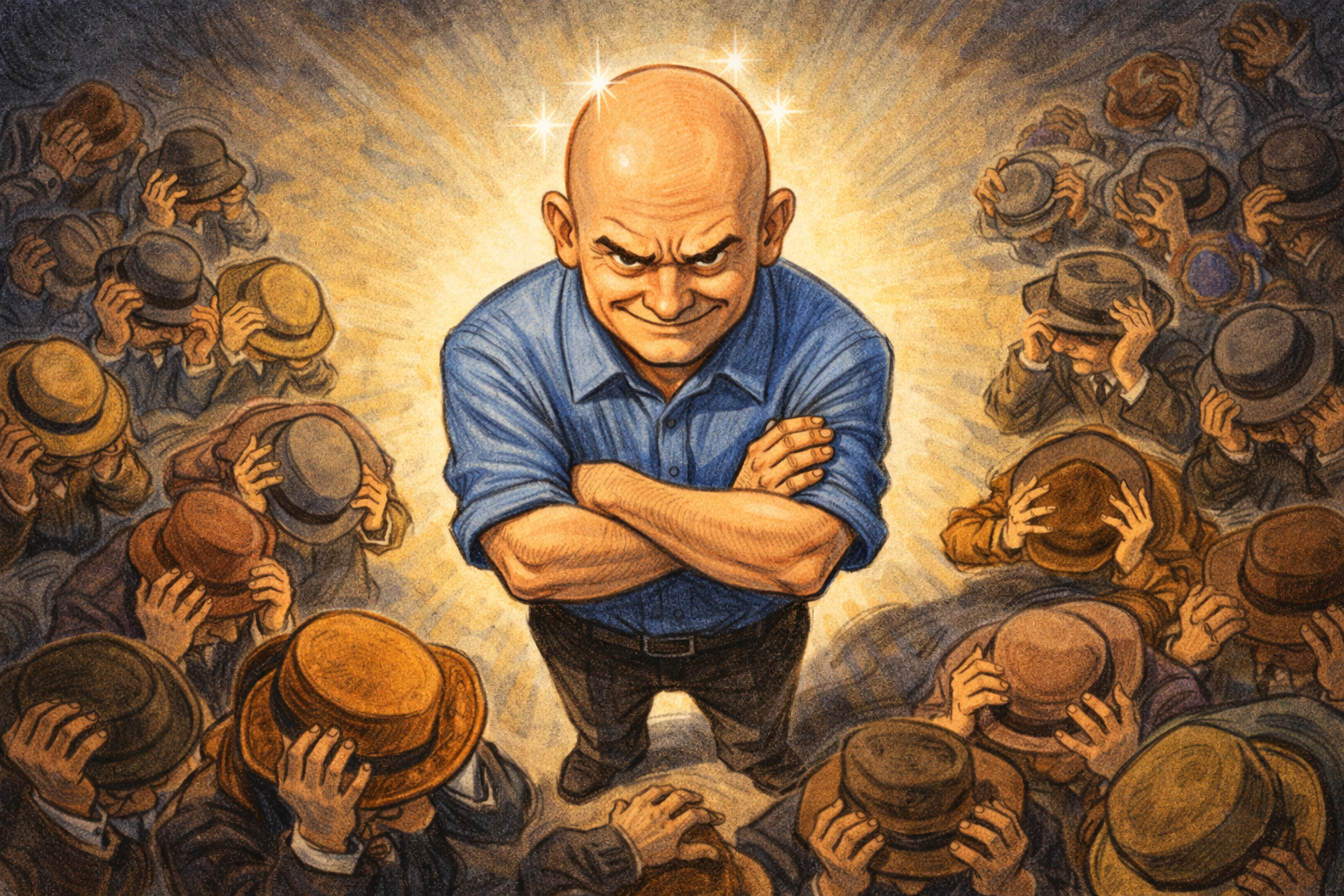
The final line—“My eyes are wide open”—is not metaphor, subtext or symbolism. It is a literal status report of physical reality. At the moment he says it, Ikea Boy’s eyes are indeed wide open. He is fully awake. Fully present. Fully at the wheel, piloting their shared body.
Which means Tyler is not.
Tyler can make phone calls, buy supplies, make speeches, set up branches of the club in distant cities… But he can only do these things when he is driving the body and Ikea Boy is asleep.
So when he says, “My eyes are wide open,” Ikea Boy is reminding Tyler (and us) which of them is currently “fronting.” Which of them has access to the eyes and proprioceptive senses.
Tyler cannot see what’s happening in that moment because he is not in the driver’s seat. Therefore he cannot know what angle the gun is actually fired at. He can only project the outcome based on his understanding of what Ikea Boy seems about to do: commit suicide. So that’s what Tyler experiences - a straight shot through the skull and out the back of the head.
But Ikea Boy knows exactly what’s going on because he has control. He is perfectly aware of his intentions and knows that Tyler can’t sense it when he jerks the gun at the last moment, producing the survivable cheek wound we actually see.
Two different perceptions.
Two different bullet paths.
One physical event.
Once you accept that the crucial line simply underscores who is controlling the sensorium—who is awake, who has the eyes—everything else becomes coherent. The wound mismatch isn’t surrealism, symbolism, or flashy theatrics. It’s showing us their diverging subjective realities. One in which the body dies, and one in which it survives. And Tyler is in the wrong reality.
So he dies.
Ultimately, I’m not claiming that this proves or disproves the larger critical theories of what Fight Club is “about.” They all have their place in our struggle to find meaning in art. I’m just surprised at how many people hijack the pivotal moment in the film to prop up their favorite interpretation — and casually dismiss the most important plot point of all as disposable Hollywood spectacle.
It’s not trivial.
It’s the load-bearing detail that makes the whole ending work.